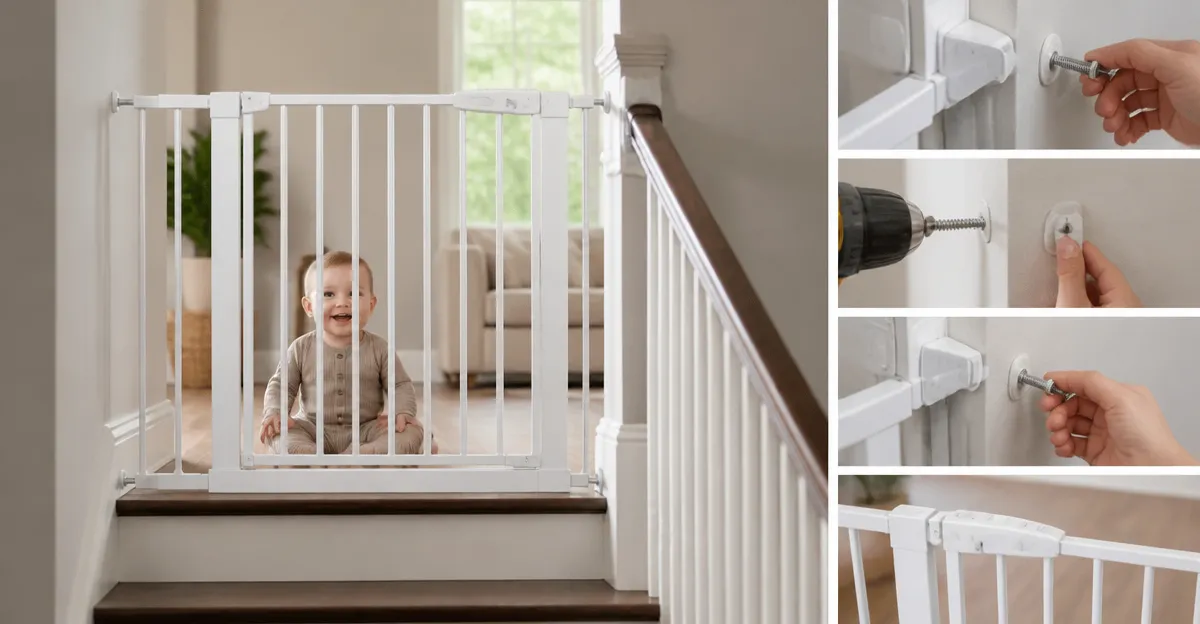
How to Safely Install a Hardware-Mounted Baby Gate at the Top of Stairs: Step-by-Step Guide for Toddleroo, Regalo & Babelio
Introduction
Parents and caregivers often face the challenge of protecting toddlers from stair hazards while maintaining easy access for adults. This guide explains how to install a hardware‑mounted baby gate at the top of stairs, a solution that combines durability with convenience. Readers will learn how to measure openings, select the appropriate gate, and perform a secure installation using trusted products. By following these steps, one can create a safe environment without sacrificing the aesthetic of the home.
What You'll Need
- Measuring tape
- Power drill with appropriate drill bits
- Phillips‑head screwdriver
- Level
- Safety goggles
- Toddleroo Easy Swing Baby Gate – $56.99, rating 4.5/5
- Regalo Easy Step Baby Gate – $38.24, rating 4.4/5
- Regalo Extra Wide Baby Gate – $39.96, rating 4.2/5
- Babelio No Bottom Bar Baby Gate – $59.99, rating 4.2/5
Step 1: Measure the Stair Opening and Choose the Right Gate
The first critical action is to measure the width of the stair opening from wall to wall. Use a tape measure and record the smallest and largest dimensions; most hardware‑mounted gates accommodate a range. For openings between 28.68 and 47.85 inches, the Toddleroo Easy Swing Baby Gate is ideal because it adjusts within that span and offers a 31‑inch height for extra protection. If the opening is narrower, between 24 and 40.5 inches, the Regalo Extra Wide Baby Gate provides a compact profile while still delivering a sturdy steel frame. For very wide doorways up to 38.5 inches, the Regalo Easy Step Baby Gate includes a 6‑inch extension that bridges larger gaps. Finally, the Babelio No Bottom Bar Baby Gate offers an auto‑close mechanism and a 28‑inch height, making it suitable for families who desire hands‑free operation. Selecting the gate that matches the measured width ensures a snug fit and eliminates the need for aftermarket fillers.
Step 2: Gather Tools and Prepare the Work Area
Before drilling, clear the stair landing of toys, rugs, and any obstacles that could interfere with the installation. Wear safety goggles to protect eyes from dust and debris. Position a level on the intended mounting line to verify that the gate will be perfectly vertical; an uneven gate can compromise the latch mechanism. Have a power drill ready with a drill bit slightly smaller than the mounting screws supplied with the gate’s hardware kit. This preparation reduces the risk of mis‑drilling and ensures the mounting brackets sit flush against the wall.
Step 3: Mark Mounting Locations and Drill Pilot Holes
Using the gate’s mounting brackets as a template, hold them against the wall at the measured height and mark the screw locations with a pencil. For top‑of‑stairs installation, the brackets should be positioned so the gate swings away from the stair tread, preventing accidental contact with a child’s foot. Drill pilot holes at the marked points; the depth should accommodate the length of the provided screws without penetrating the opposite side of the wall. If the wall is composed of brick or concrete, use a masonry bit and insert wall anchors supplied with the gate. Properly sized pilot holes allow the screws to grip securely, which is essential for a gate that will bear repeated use.
Step 4: Install the Mounting Brackets and Attach the Gate
Secure the mounting brackets with the supplied screws, tightening them until they are firmly seated but not stripped. The Toddleroo Easy Swing Baby Gate includes a hardware‑mounted system that requires drilling into studs for maximum stability; the gate’s matte bronze finish also complements home décor. The Regalo Extra Wide Baby Gate comes with a complete wall‑mounting kit, including brackets and a rotating latch that aligns with the gate’s swing direction. For the Regalo Easy Step Baby Gate, the pressure‑mount design is not suitable for top‑of‑stairs use; instead, use its hardware‑mount option to ensure compliance with safety guidelines. Finally, attach the gate to the brackets, confirming that the latch aligns with the lock mechanism. A one‑hand operation feature, present on both the Toddleroo and Babelio models, allows adults to open the gate while keeping a hand free for a child.
Step 5: Adjust Swing Direction, Test the Latch, and Verify Clearance
Most hardware‑mounted gates allow the swing direction to be set during installation. The Toddleroo Easy Swing Baby Gate includes a swing‑control feature that lets you select whether the gate opens toward or away from the stairs; for top‑of‑stairs placement, always select the away‑from‑stairs option. The Babelio No Bottom Bar Baby Gate automatically closes, which can be useful for families who want the gate to stay shut without manual effort. After installation, open and close the gate several times using one hand to ensure the latch engages smoothly and the gate does not wobble. Measure the clearance between the gate and the stair edge; a gap larger than 1/4 inch may allow a child to squeeze through, necessitating a tighter adjustment. Verify that the gate does not obstruct the stair tread or create a tripping hazard.
Step 6: Final Adjustments, Maintenance, and Safety Checks
Once the gate operates correctly, tighten any loose screws after a day of use, as vibrations can cause minor loosening. Periodically inspect the latch mechanism for wear, especially on gates with high‑traffic use such as the Toddleroo and Regalo Extra Wide models, which feature steel construction designed for longevity. Clean the gate with a damp cloth; avoid abrasive cleaners that could damage the matte bronze finish or the white coating on the Babelio gate. Finally, conduct a monthly safety audit: pull the latch with a firm hand to confirm it resists forced opening, and ensure the gate still swings away from the stairs. Consistent maintenance preserves the gate’s certification status, such as the Baby Safety Alliance certification held by the Toddleroo and Regalo models.
Tips & Pro Tips
- When installing on a plaster wall, locate studs using a stud finder; mounting into studs provides the strongest anchor.
- Use a small piece of painter's tape on the gate to mark the ideal swing arc before final tightening.
- If the stair opening is irregular, consider the Babelio No Bottom Bar Baby Gate because its auto‑close and full‑width walk‑through design accommodate slight variations.
- For families with pets, the double‑lock design on the Babelio gate offers added resistance against determined dogs.
- Keep the gate's latch button free of debris; a buildup of dust can impede the one‑hand operation.
Troubleshooting
| Problem | Possible Cause | Solution |
|---|---|---|
| Gate wobbles after installation | Mounting screws not fully tightened or brackets misaligned | Re‑tighten screws, use a level to re‑align brackets, and re‑check clearance. |
| Latch does not engage | Latch spindle mispositioned or debris inside lock | Open the gate, clear any debris, and ensure the latch aligns with the lock cup. |
| Gate swings toward stairs | Swing control set incorrectly | Adjust the swing‑control lever on the Toddleroo gate or rotate the hinge on the Regalo gate to face away from stairs. |
| Auto‑close fails | Spring mechanism weakened | Contact Babelio customer support for replacement parts; avoid using excessive force when closing. |
Conclusion
Installing a hardware‑mounted baby gate at the top of stairs is a straightforward process when one follows precise measurements, uses the appropriate tools, and selects a gate that matches the opening width. The guide demonstrates how the Toddleroo Easy Swing Baby Gate, Regalo Easy Step Baby Gate, Regalo Extra Wide Baby Gate, and Babelio No Bottom Bar Baby Gate can serve as reliable tools for the task. By adhering to the steps, performing regular safety checks, and maintaining the hardware, one can provide a secure environment for toddlers and pets while preserving the aesthetic integrity of the home.
Frequently Asked Questions
What tools are required to install a hardware‑mounted baby gate on stairs?
You need a measuring tape, power drill with bits, Phillips‑head screwdriver, level, and safety goggles.
How do I determine the correct gate size for the top of my stairs?
Measure the width of the opening at the top of the stairs and choose a gate that fits within that range, allowing for a few extra inches for hardware adjustment.
Can I use the Toddleroo Easy Swing Baby Gate for both indoor and outdoor stairways?
Yes, the Toddleroo gate is designed for indoor use but its sturdy hardware makes it suitable for covered outdoor stairways as well.
What is the best way to ensure the gate is level and securely mounted?
Place a level on the gate’s mounting brackets before tightening the screws, and re‑check after installation to confirm it remains plumb.
Is it safe to install a hardware‑mounted gate without professional help?
Absolutely; by following the step‑by‑step guide and using the proper tools, most parents can securely install the gate themselves.