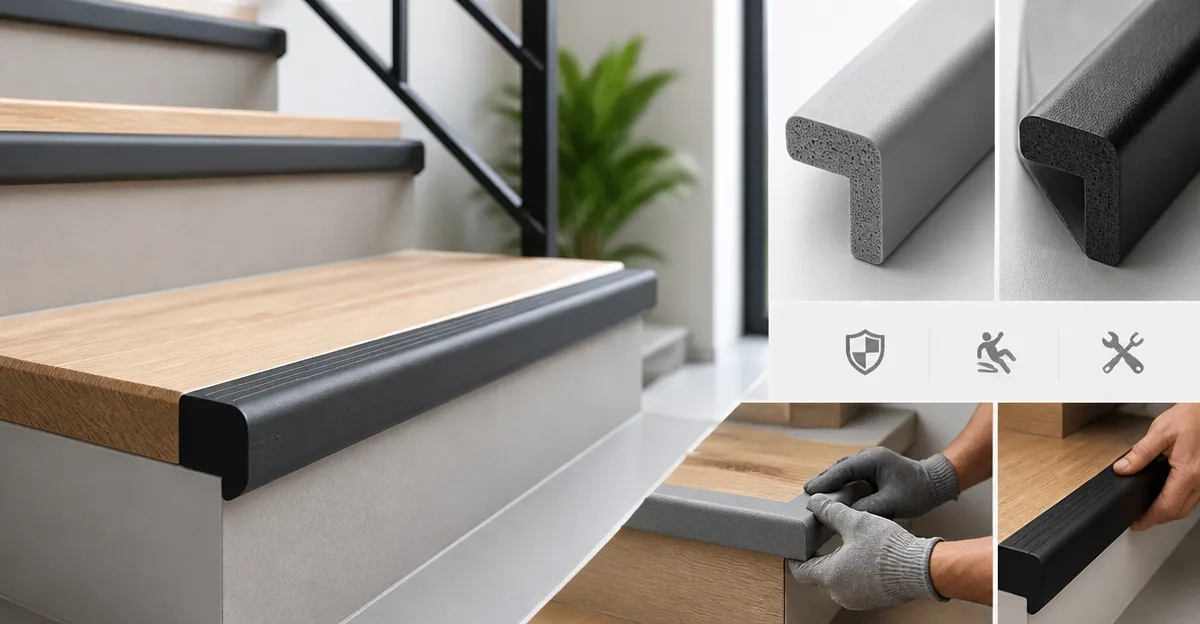
Corner Guards for Stair Edges: Foam vs Rubber – Ultimate Installation Guide & Expert Tips
Introduction
Stair edges present a significant hazard for toddlers and seniors alike. This guide explains the essential differences between foam and rubber corner guards, demonstrates how to install them safely, and offers expert recommendations for selecting the most appropriate product. Readers will learn the science behind impact absorption, discover real‑world product examples, and acquire practical tips that reduce injury risk without compromising interior design.
The information presented is based on verified Amazon product data, user sentiment, and industry standards. By the end of this article, one will be able to evaluate material performance, compare pricing, and execute a flawless installation on any stair configuration.
Background and Context
Corner guards are protective accessories that cushion sharp edges and absorb kinetic energy when a person collides with a stair tread or riser. Two primary material families dominate the market: expanded foam and high‑density rubber. Foam products typically rely on low‑density polymer cells to compress under impact, while rubber guards use dense polymer blends that resist deformation and provide a firmer barrier.
Key technical terms include Shore A hardness, a measurement of material softness; a higher Shore A value indicates a harder, less compressible surface. Density refers to mass per unit volume; greater density often translates to superior impact mitigation. Understanding these concepts assists consumers in matching a guard to the specific risk profile of a stairway.
Installation considerations involve surface preparation, adhesive strength, and the ability to remove the guard without damaging finishes. Proper preparation, such as cleaning with isopropyl alcohol and allowing the adhesive to cure, maximizes longevity.
Material Science: Foam Versus Rubber
Foam corner guards are usually composed of polyurethane or ethylene‑vinyl acetate (EVA). Their cellular structure compresses quickly, spreading impact forces over a larger area. However, low‑density foams may lose resilience after repeated impacts, reducing protective capability over time.
Rubber corner guards, particularly those rated Shore A 20‑N, possess a solid polymer matrix that absorbs energy through deformation rather than compression. The higher density of rubber results in a longer service life and consistent performance, especially in high‑traffic areas such as staircases.
Both materials can be formulated without harmful chemicals. Products that are free of BPA, phthalates, lead, and SCCPs comply with U.S. and EU child‑safety regulations, ensuring that accidental chewing does not pose a toxic risk.
When selecting a guard, one must weigh the trade‑off between softness (comfort for children) and durability (long‑term protection). The following sections illustrate how leading Amazon products embody these principles.
Product Recommendations
CalMyotis Clear Corner Protectors
For families that prioritize a discreet appearance, the CalMyotis Corner Protectors offer a clear, dense PVC construction that resists discoloration. Each pack contains twelve pieces priced at $9.98 with a rating of 4.5 stars from 60,206 reviews. The product features a high‑power adhesive, a one‑minute installation process, and a design that absorbs shock while remaining virtually invisible.
Key features include:
- Non‑toxic, BPA‑free composition.
- Premium PVC that balances density and impact resistance.
- Clear, low‑profile aesthetic suitable for modern interiors.
- Three adhesive pads per piece for secure attachment.
Customer sentiment highlights ease of installation and durability, though some users note that removal may require careful technique to avoid residue.
Wappa Transparent Corner Protectors
The Wappa Baby Corner Protectors combine ball‑shaped and L‑shaped geometry to enhance coverage on stair edges. Priced at $9.95 for a twelve‑piece pack, these guards hold a 4.5‑star rating from 4,654 reviews. Their patented transparent PVC material offers both visual harmony and a soft yet durable cushion.
Notable attributes include:
- Patented dual‑shape design for superior edge coverage.
- Extra‑wide profile that adheres to a variety of stair dimensions.
- Strong adhesive that remains effective over months of use.
- Non‑toxic formulation meeting child‑safety standards.
Reviewers praise the product’s blend of aesthetic subtlety and reliable protection, while caution that removal may affect painted surfaces.
Soft Black Corner Protectors
The Soft Black Corner Protectors from USfloatwishes are crafted from upgraded NBR material, delivering greater elasticity than standard silicone. At $9.99 per twelve‑piece pack and a 4.5‑star rating from 3,792 reviews, these guards emphasize comfort and ease of installation.
Features include:
- Pre‑taped adhesive for a one‑minute installation.
- Widened and thickened profile for enhanced impact absorption.
- Compliance with BPA, phthalate, latex, lead, and SCCP regulations.
- Soft black finish that blends with darker furniture while remaining visible for quick inspection.
Customers appreciate the softness and durability, noting that the guards remain attached even after repeated cleaning.
Roving Cove Heavy‑Duty Rubber Guards (Black)
For environments that demand maximum cushioning, the Roving Cove Black Corner Protectors provide 0.4‑inch thick, Shore A 20‑N rubber foam. Each set of four guards costs $6.99 and carries a 4.6‑star rating from 17,893 reviews. The product is free of BPA, phthalates, heavy metals, latex, and SCCPs, and it includes premium 3M double‑sided tape for secure adhesion.
Highlights include:
- High‑density rubber foam that exceeds industry standards.
- Flame‑resistant composition that passed U.S. flammability tests.
- Pre‑taped 9448A 3M tape for long‑lasting attachment.
- Onyx black color that complements dark wood or granite surfaces.
Reviewers consistently report excellent impact mitigation and a professional appearance that does not detract from interior design.
Roving Cove Heavy‑Duty Rubber Guards (White)
The Roving Cove White Corner Protectors share the same dense rubber formulation as the black version, but feature an oyster‑white finish suitable for light‑colored staircases. Pricing, rating, and specifications mirror the black set, providing a versatile aesthetic option without compromising safety.
Key benefits are identical to the black model, with the added advantage of color coordination for lighter interiors.
Comparison and Selection Guide
When choosing between foam and rubber stair edge guards, consider the following criteria:
| Criterion | Foam (e.g., Soft Black) | Rubber (e.g., Roving Cove) |
|---|---|---|
| Impact Absorption | Good for low‑impact collisions; compresses quickly. | Excellent for high‑impact scenarios; dense foam resists deformation. |
| Durability | May lose resilience after repeated impacts. | Maintains performance over many years. |
| Aesthetic Options | Clear or black; blends with most décor. | Black or white; matches dark or light wood. |
| Installation Ease | Pre‑taped; one‑minute application. | Pre‑taped with strong 3M tape; slightly longer press time. |
| Price per Unit | Approximately $0.83. | Approximately $1.75 per guard. |
For households with high foot traffic or steep staircases, rubber guards such as the Roving Cove models provide superior protection. For aesthetic‑focused environments where a subtle look is paramount, clear PVC options like CalMyotis or Wappa may be preferable.
Best Practices & Expert Tips
- Prepare the Surface Thoroughly: Clean each stair edge with a lint‑free cloth and isopropyl alcohol to remove dust, oils, and residues. Allow the surface to dry completely before applying any adhesive.
- Measure and Align Accurately: Use a ruler or measuring tape to ensure that the guard covers the entire width of the stair riser. Misalignment can create gaps that reduce safety.
- Apply Consistent Pressure: Press each guard for at least 30 seconds, ensuring full contact between the adhesive and the stair material. This step prevents premature peeling.
- Test After Installation: Gently tap the guard with a fingertip to confirm that it remains firmly attached. If any lifting occurs, re‑apply pressure or replace the guard.
- Consider Seasonal Temperature Effects: Adhesive bonds are strongest at room temperature (20‑25°C). In very cold environments, allow the guards to acclimate for several hours before installation.
- Plan for Removal: When the child outgrows the need for protection, use a hairdryer on low heat to soften the adhesive before gently peeling. This technique minimizes paint damage.
- Maintain Cleanliness: Dust and debris can degrade adhesive performance. Wipe guards with a damp cloth periodically; avoid abrasive cleaners.
Frequently Asked Questions
1. Are foam and rubber corner guards safe for children who chew on them?
Both product families are formulated without BPA, phthalates, lead, latex, and SCCPs. They are considered non‑toxic if mouthed, but parents should still supervise to prevent choking hazards.
2. How long does the adhesive typically last?
When installed on a clean, smooth surface, the adhesive can remain effective for three to five years. High‑traffic areas may experience earlier wear, requiring re‑application.
3. Can these guards be used on metal stair rails?
Yes, provided the metal surface is clean and free of rust. For best results, lightly sand the area to create a microscopic texture that improves adhesive grip.
4. What is the difference between Shore A 13 and Shore A 20?
Shore A 13 indicates a softer foam that compresses more readily, offering a cushier feel but less impact resistance. Shore A 20 is harder, delivering greater energy absorption and longer durability.
5. Is it necessary to remove old guards before installing new ones?
Yes. Residual adhesive can interfere with the bonding of new guards. Use a gentle adhesive remover or warm soapy water to clean the surface before re‑application.
6. Do the clear guards yellow over time?
High‑quality PVC, such as that used in CalMyotis and Wappa products, resists discoloration for several years under normal indoor lighting.
7. Are the rubber guards flame‑resistant?
Roving Cove rubber guards are inherently flame‑resistant and have passed U.S. flammability tests, making them suitable for staircases near fireplaces.
Conclusion
Choosing the appropriate corner guard for stair edges requires an understanding of material properties, aesthetic preferences, and installation logistics. Foam guards excel in subtlety and ease of placement, while rubber guards deliver unmatched impact mitigation and durability. By following the expert preparation and installation steps outlined above, homeowners can safeguard children and seniors without compromising interior design. The product examples provided illustrate how real‑world solutions align with these principles, empowering readers to make informed purchasing decisions.
Products Featured in This Guide
CalMyotis Corner Protectors
Price: $9.98 | Rating: 4.5/5 (60,206 reviews)
Featured for its clear PVC design, high‑density construction, and easy one‑minute installation, making it ideal for homeowners who desire an invisible safety solution.
Wappa Baby Corner Protectors
Price: $9.95 | Rating: 4.5/5 (4,654 reviews)
Featured for its patented dual‑shape geometry, strong adhesive, and transparent finish that balances protection with aesthetics.
Soft Black Corner Protectors
Price: $9.99 | Rating: 4.5/5 (3,792 reviews)
Featured for its upgraded NBR material that delivers superior elasticity and a pre‑taped installation process suitable for rapid deployment.
Roving Cove Black Corner Protectors
Price: $6.99 | Rating: 4.6/5 (17,893 reviews)
Featured for its high‑density rubber foam (Shore A 20‑N), flame‑resistant composition, and premium 3M double‑sided tape, delivering maximum impact protection for dark‑finished staircases.
Roving Cove White Corner Protectors
Price: $6.99 | Rating: 4.6/5 (17,893 reviews)
Featured for the same high‑density rubber performance as the black version, with an oyster‑white finish that integrates seamlessly with light‑colored stair materials.